26th Oct, 2019 10:00

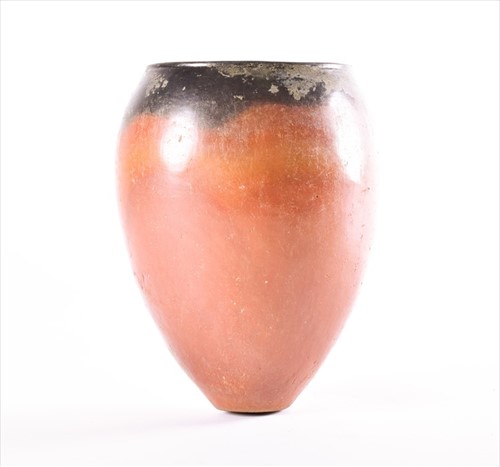


A large Egyptian black-topped pottery jar possibly Predynastic period, Naqada I - II, circa 4000 to 3200 BC, the jar of ovoid form, tapering to a small slightly flattened base, the rounded rim flaring slightly, 19 cm x 15 cm. Provenance: from a private collection Predynastic Egyptian black-top vessels were traditionally made from silt deposits taken from the Nile river due to their abundance in iron and silica. After the pot had dried but before it was fired, it would first be burnished and rubbed smooth with a small stone to create the pinstripe vertical striations still visible today. An iron-rich slip would then be applied just before firing; when placed in an oxygen-rich environment, the elevated temperatures would create the vessels' signature red-orange hue. After the end of the Naqada III period around 3,000 BCE, the use of Nile silt in pottery creations fell out of favor with the Pre-Dynastic Egyptians. This is due to the increase in popularity of marl clay, a newly-discovered material for creating terracotta objects which was easier to shape and enabled firing at far greater temperatures than the highly-porous silt.
Sold for £1,100
A large Egyptian black-topped pottery jar possibly Predynastic period, Naqada I - II, circa 4000 to 3200 BC, the jar of ovoid form, tapering to a small slightly flattened base, the rounded rim flaring slightly, 19 cm x 15 cm. Provenance: from a private collection Predynastic Egyptian black-top vessels were traditionally made from silt deposits taken from the Nile river due to their abundance in iron and silica. After the pot had dried but before it was fired, it would first be burnished and rubbed smooth with a small stone to create the pinstripe vertical striations still visible today. An iron-rich slip would then be applied just before firing; when placed in an oxygen-rich environment, the elevated temperatures would create the vessels' signature red-orange hue. After the end of the Naqada III period around 3,000 BCE, the use of Nile silt in pottery creations fell out of favor with the Pre-Dynastic Egyptians. This is due to the increase in popularity of marl clay, a newly-discovered material for creating terracotta objects which was easier to shape and enabled firing at far greater temperatures than the highly-porous silt.