Do Saltwater Pearls Hold Their Value?
Saltwater pearls are associated with stronger lustre, rounder shapes, and a more traditional look
08/06/2026
Saltwater pearls are pearls formed in oysters that live in marine environments such as bays, lagoons, and coastal waters. Farmed or natural, pearls form in the shell of a mollusc, typically an oyster or a mussel, when an irritant (a grain of sand, some organic material or even a parasite) gets into the shell. The mollusc responds to this minute intruder and secretes layers and layers of nacre (mother of pearl) to form a pearl. It is this nacre that reflects light and creates the lustre that makes pearls so desirable; the thicker the nacre, the deeper the lustre.
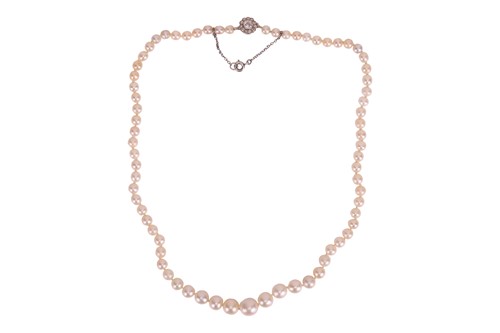
An Edwardian Natural Saltwater Pearl Necklace
Although they come in all shapes and sizes, the ideal shape for a pearl is entirely round and smooth, although teardrop shapes are popular for pendants and earrings. Their lustre, size, shape and rarity determine their value.
Natural saltwater pearls are incredibly rare, as it takes hundreds of pearl oysters and mussels to find even one wild specimen. Not only is this wasteful, but the manual process of diving to the seabed to collect the shells is dangerous and hugely time-consuming. In the past, the time taken to collect pearls of the right size and colour to make up a piece of jewellery rendered the gemstones extremely rare and valuable.
The market changed in the early 20th Century when the process of producing cultured or farmed pearls was refined by the Japanese and became commercially viable. Despite initial suspicion of cultured pearls' lower prices, the market embraced their newfound affordability and accessibility, and now almost all pearls sold are cultured.
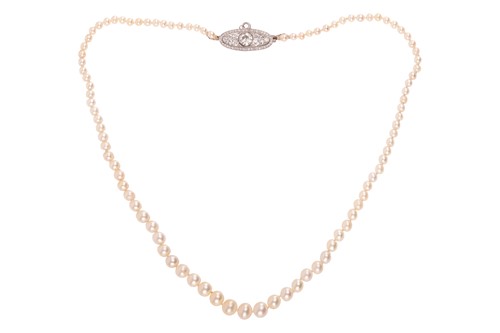
An early 20th Century natural pearl necklace
In general, saltwater pearls are associated with stronger lustre, rounder shapes, and a more traditional fine jewellery ‘look’ than many freshwater pearls. They are also typically more expensive because saltwater oysters usually produce only one pearl at a time, while freshwater mussels can produce many. This lower yield and a longer cultivation time help explain why saltwater pearls are often seen as the more luxurious end of the pearl market.
But do saltwater pearls hold their value? The short answer is sometimes, but not in the same way as gold or diamonds. While natural saltwater pearls are extremely rare and consistently command high prices, most cultured saltwater pearls do not automatically appreciate over time, although good examples can retain value in the pre-loved market. The strongest performers tend to be high-quality Akoya, Tahitian, and South Sea pearls with excellent lustre, clean surfaces, round or attractive shapes, good nacre, and well-matched colour. Larger pearls, designer pieces, original certificates, and excellent condition can all support stronger resale prices in the pre-loved market.
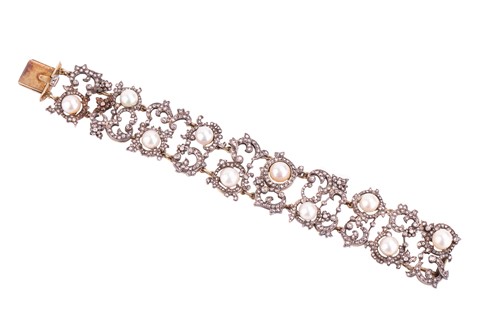
A mid-Victorian natural saltwater pearl and rose cut diamond bracelet
Should you wish to sell your saltwater pearl jewellery, our expert team at Dawsons will professionally assess and value your piece, whilst our dynamic in-house marketing will ensure that it reaches a huge audience of known buyers across the globe. Our aim is to ensure that your pearls achieve the highest possible price at one of our monthly auctions.
Recent successful sales include an Edwardian natural saltwater pearl necklace with a diamond clasp, which sold for £28,000 (February 2026).
Related Articles
How Do I Tell if My Pearls Are Real?
How Can You Tell if a Necklace is Antique?
Buy or Sell Pearl Necklaces with Dawsons
Our team of Gemmology-qualified experts make it simple to sell your luxury jewellery online or buy fine jewellery at auction. Dawsons Auctioneers provide accurate valuations, competitive results, and trusted advice every step of the way. Get in touch today to find out what your jewellery is worth.
Call us on 0207 431 9445 or email us on info@dawsonsauctions.co.uk